
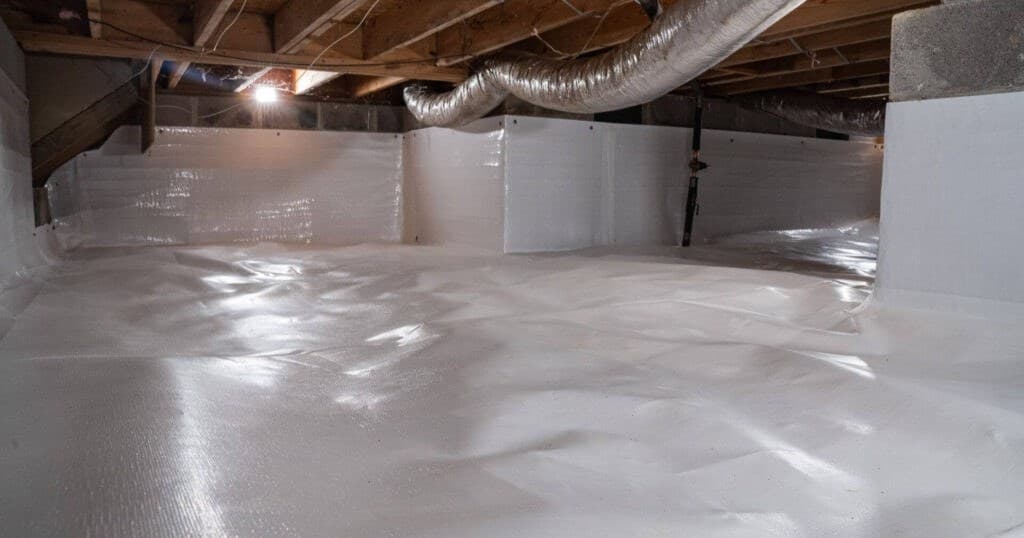
Quick answer: most crawl spaces in the Piedmont Triad are damp for one of three reasons, and they are not interchangeable. Water coming in from outside is a grading and gutter problem. Water sitting on bare dirt is a vapor barrier problem. Water condensing on cold surfaces in summer is a ventilation problem. Spend money on the wrong one and the crawl space stays wet.
Why This Region Has So Many of Them
Drive through Winston-Salem, Lexington, or Clemmons and count the houses sitting a couple of feet off the ground on a block foundation. Crawl spaces are the default here, and they have been for decades. That is not a flaw. It is a practical answer to clay soil, a modest frost line, and rolling lots that would cost a fortune to make level.
The trouble is that a crawl space is a room. It is a room nobody goes into, with a dirt floor and outside air blowing through it, sitting directly underneath your insulation, your ductwork, and your floor framing. Whatever happens down there eventually happens upstairs.
Sign One: Water That Came From Outside
If I find standing water, mud, or a clear waterline on the block after a heavy rain, I am not looking at a crawl space problem. I am looking at a drainage problem that ended up in the crawl space.
The usual causes are boring and fixable. Gutters that overflow because they have not been cleaned since the oaks dropped last fall. Downspouts that dump against the foundation instead of six feet away from it. Grade that slopes back toward the house because a flower bed got built up over the years. On the Piedmont's red clay, water does not soak in quickly, so it runs, and it runs downhill toward the lowest thing nearby.
Fix the outside first. I have seen homeowners spend thousands on a sump and a liner while a downspout kept emptying a roof's worth of water two feet from the block.
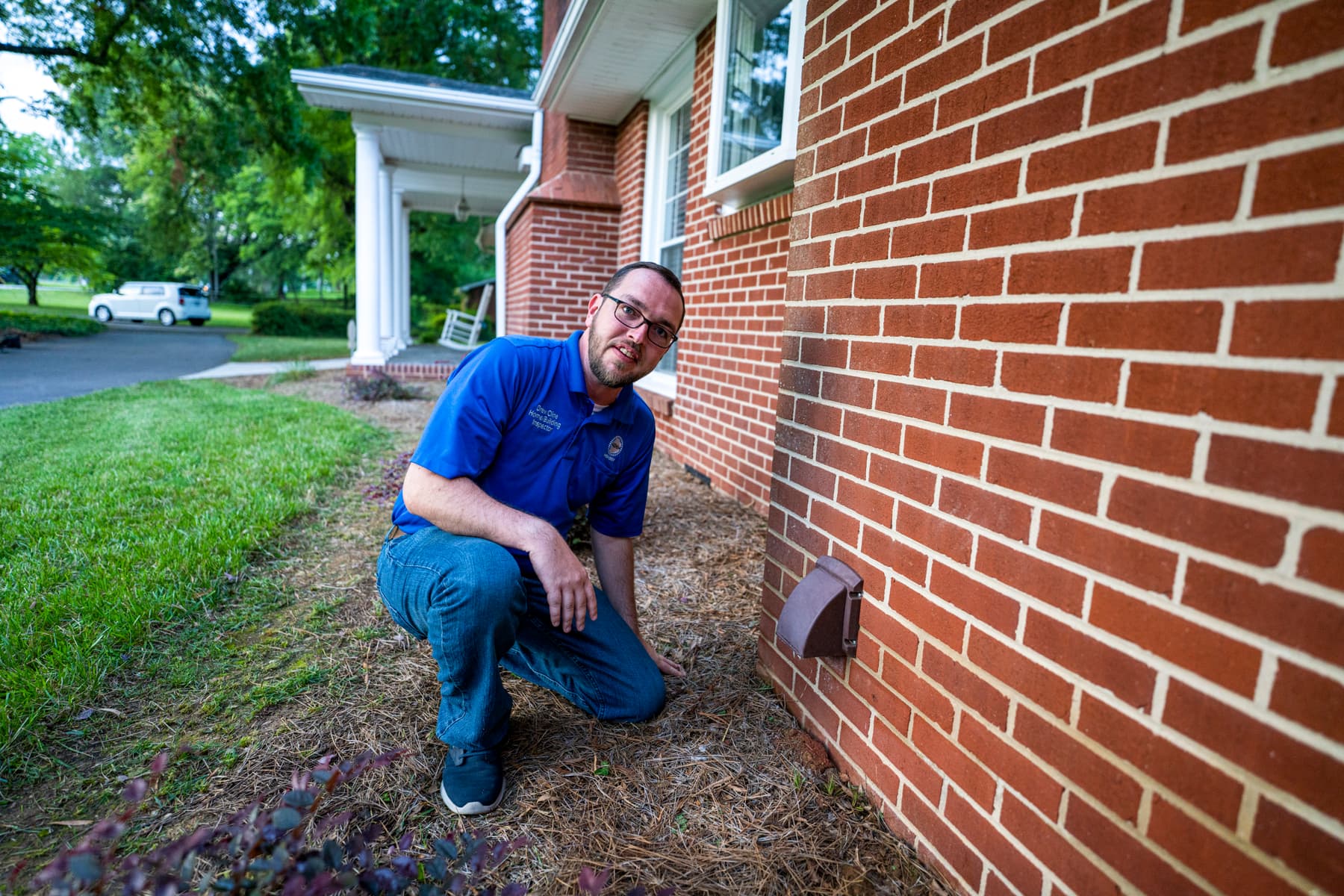
Sign Two: Bare Dirt and a Torn Vapor Barrier
North Carolina soil is never really dry. Moisture rises out of exposed ground continuously, and in a closed space it has nowhere to go. That is why the code calls for a ground cover, and why I flag a missing or shredded one on almost every older house I inspect.
What I actually find is rarely nothing. It is usually a black plastic sheet that was laid in 1998, has been walked on by three generations of HVAC technicians, and now has holes the size of dinner plates with the seams pulled apart. A vapor barrier only works if it covers the ground, so partial coverage does most of nothing.
Replacing it is not glamorous work, but it is one of the highest value repairs in the house. It is also cheap compared to what happens if you skip it.
Sign Three: Summer Condensation
This one confuses people because the water shows up in July, in a crawl space with no leaks at all.
Here is what happens. Triad summer air is heavy with humidity. Foundation vents let that air into a crawl space where the ground, the ductwork, and the cold water lines are all well below the dew point. The moisture condenses out onto every cold surface it touches. You get wet duct insulation, rusting hangers, damp subfloor, and eventually the musty smell that drifts up through the floor registers.
The old advice was to add more vents. Modern practice often goes the other direction: seal the vents, cover the ground, insulate the foundation walls, and put a dehumidifier down there. That is what encapsulation means, and on the right house it works well.
Do You Need Full Encapsulation?
Not always. Encapsulation is a real expense, and it is the wrong first step on a crawl space that is wet because a gutter is broken. I look at it as a ladder:
Start with gutters, downspout extensions, and grade. Then a full, sealed ground cover. Then look at what the space is doing across a full summer. If it is still damp with all of that handled, then a conditioned and sealed crawl space earns its price.
An inspection is where you find out which rung you are on. I go into the crawl space, not just up to the access door, and the photos come back with the report so you can see what I saw.
What It Costs You If You Ignore It
Wood needs sustained moisture to rot, and a damp crawl space provides it year after year. The order is usually the same: the subfloor gets soft near the perimeter, then the band joist, then the floor joist ends where they sit on the sill. By the time a floor feels springy upstairs, the repair has moved from a few hundred dollars of plastic sheeting to structural carpentry.
Insulation is the earlier casualty. Wet fiberglass batts sag out of the joist bays and stop insulating, which is why cold floors in February are often a crawl space symptom rather than a furnace one.
Frequently Asked Questions
Should I close my foundation vents in the winter? Seasonal vent closing is a coin flip that helps a little in winter and hurts in summer. If moisture is a real problem, the better conversation is about sealing the crawl space properly rather than opening and closing vents twice a year.
Is the musty smell in my house coming from the crawl space? Very often, yes. Air moves upward through a house, so crawl space air ends up in your living space. A persistent musty smell with no obvious source upstairs is worth a look underneath.
Will a dehumidifier alone fix it? Only if the ground is covered and the outside water is controlled. A dehumidifier running against open vents and bare dirt just runs up your power bill.
Can you inspect a crawl space that is tight or has standing water? I get into what I can safely get into and I document what I cannot reach, including why. A crawl space I could not fully enter is noted in the report rather than quietly skipped.
Related Reading
- Due Diligence Period Inspections in the Piedmont Triad: How to Spend the Window
- Maintenance Inspections
Get Underneath It
If you are buying a house with a crawl space, or you own one and the floors have started feeling cold and damp, let us find out what is actually going on down there. Top Notch Home Inspections serves Winston-Salem, Lexington, Greensboro, High Point, Clemmons, Kernersville, Lewisville, Mocksville, King, and the surrounding counties. Call (336) 403-7074 or email drew@top-notch-inspections.com.