
Quick answer: radon comes out of the ground, and the ground under the Piedmont Triad is uneven. Your neighbor can test low while you test high, because the rock, the soil depth, and the way your house sits on it are all different. The only way to know your number is to test your house.
Where the Radon Here Comes From
Radon is a radioactive gas produced as uranium in soil and rock breaks down. It has no color and no smell, which is the whole problem. It seeps up through the ground and finds its way into houses through foundation cracks, plumbing penetrations, crawl space floors, and sump openings.
The Piedmont sits on granite and gneiss bedrock, and formations like that tend to carry more uranium than the sedimentary ground further east. That is the short version of why counties across this part of North Carolina turn up elevated results more often than the coastal plain does.
But bedrock does not stop neatly at a property line. The fracture pattern in the rock, how deep the soil is above it, and how much of it your foundation is in contact with all change from lot to lot. That is why I am careful when a buyer tells me the seller's neighbor tested fine.
What the House Itself Contributes
The building is half the equation. A house pulls air in from below almost constantly, because warm air rising out the top has to be replaced from somewhere. In the Triad's heating season that effect gets stronger, and the easiest air for the house to grab is the air sitting under the floor.
That means the same soil can produce two very different indoor numbers depending on:
- Whether the foundation is a crawl space, a slab, or a basement
- Whether the crawl space ground is covered and sealed
- How much the heating system runs and how leaky the ductwork underneath is
- How many cracks and penetrations connect the living space to the ground
A sealed and encapsulated crawl space usually helps. A basement finished into a family room usually hurts, because you have moved people into the lowest and most exposed part of the house.
How the Test Actually Runs
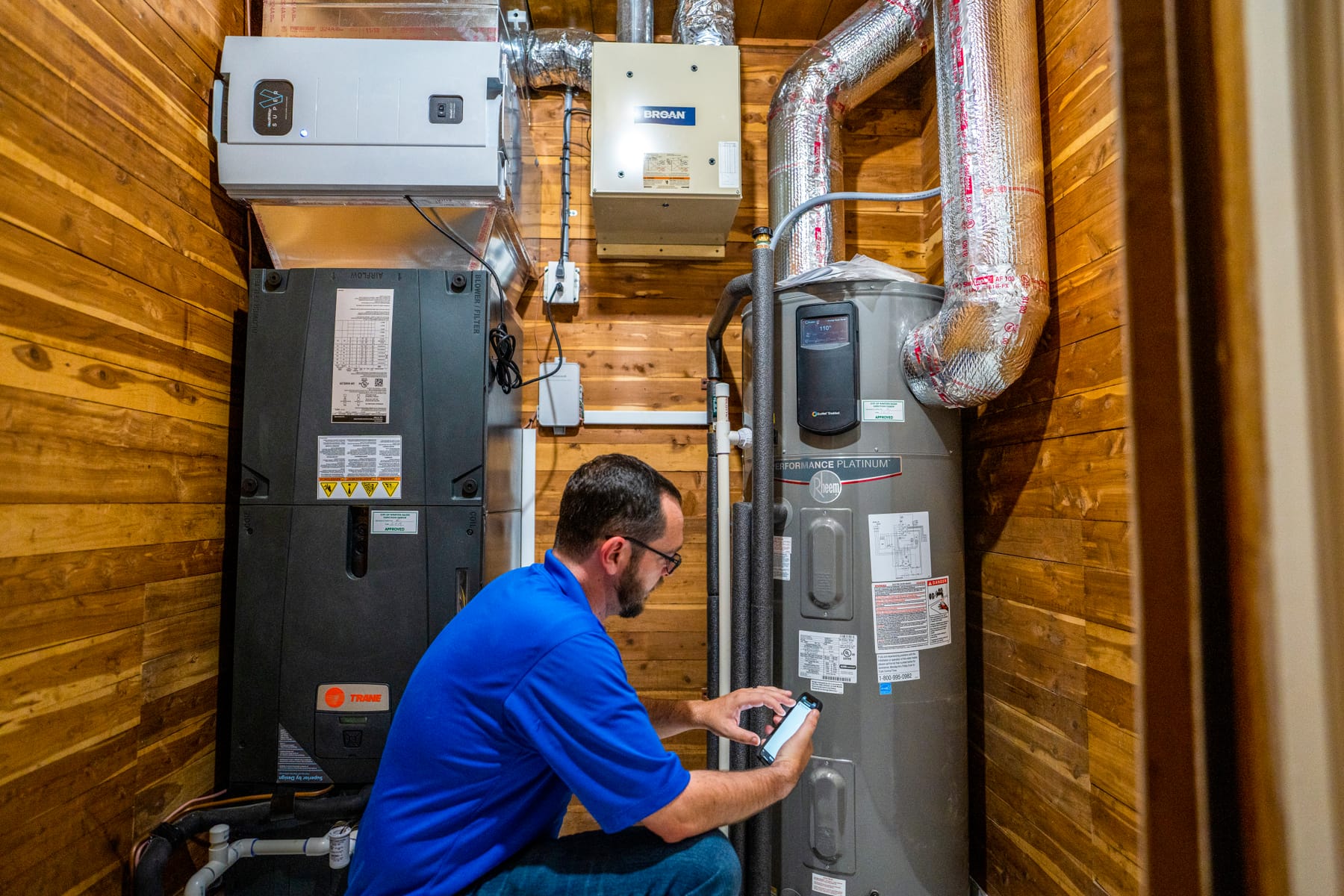
The test I place is a 48 hour measurement in the lowest liveable level of the home. The equipment goes in position, stays untouched for the full period, and comes out with the reading.
The house needs to be under closed conditions for that stretch, which means windows and exterior doors stay shut except for normal coming and going. If a listing is being aired out for showings during the test, the result is not worth much. Sellers and agents almost always cooperate once someone explains that.
Fall and winter are the strongest months to test, because closed house conditions are natural and the heating system is doing its part to draw soil air in. A summer test with the windows open can read low and give you a false sense of safety.
Reading the Number
The EPA action level is 4.0 picocuries per liter. At or above that, mitigation is recommended. Below it, radon has not gone away, it is just at a level where the agency stops recommending action, and the EPA has been clear that reducing exposure below 4.0 still carries benefit.
If your result comes back high, do not panic about the house. Radon is one of the more solvable problems a property can have. A mitigation system is typically a sealed suction point under the slab or under the crawl space ground cover, with a fan and a vent pipe carrying the gas up above the roofline. It is a day of work by a licensed mitigation contractor, and it is far cheaper than most of the repairs buyers argue about.
Timing It Into a Purchase
North Carolina buyers work inside a due diligence window, and 48 hours of testing plus placement and reporting eats several days of it. Order the radon test at the same time you book the inspection so both results land together with room left to act.
For current homeowners there is no clock at all. If you have never tested, this is a good season to do it, particularly if you spend time in a basement level or a bonus room over a crawl space.
Frequently Asked Questions
Does a crawl space house need radon testing? Yes. A crawl space is not a barrier. Air from under the floor moves into the living space, and I regularly see elevated results in crawl space homes across Forsyth and Davidson County.
How often should I retest? Every couple of years is reasonable, and after any work that changes the foundation, the heating system, or the crawl space. Retest after mitigation as well to confirm the system is doing its job.
Can I use a hardware store test kit instead? You can, and it is better than not testing. For a real estate transaction, though, a test placed and retrieved by an inspector under documented closed house conditions carries more weight with everyone involved.
Does a high reading mean the sale falls apart? Rarely. Mitigation has a known cost and a known outcome, so it usually becomes a straightforward negotiation rather than a deal breaker.
Related Reading
- Crawl Space Moisture in Winston-Salem Homes: What Actually Dries One Out
- Due Diligence Period Inspections in the Piedmont Triad: How to Spend the Window
Book a Test
Radon testing can be handled on the same visit as your home inspection, or on its own if you already own the house. Top Notch Home Inspections covers Winston-Salem, Lexington, Greensboro, High Point, Clemmons, Kernersville, Lewisville, Mocksville, King, and the surrounding counties. Call (336) 403-7074 or email drew@top-notch-inspections.com and I will get you on the schedule.